



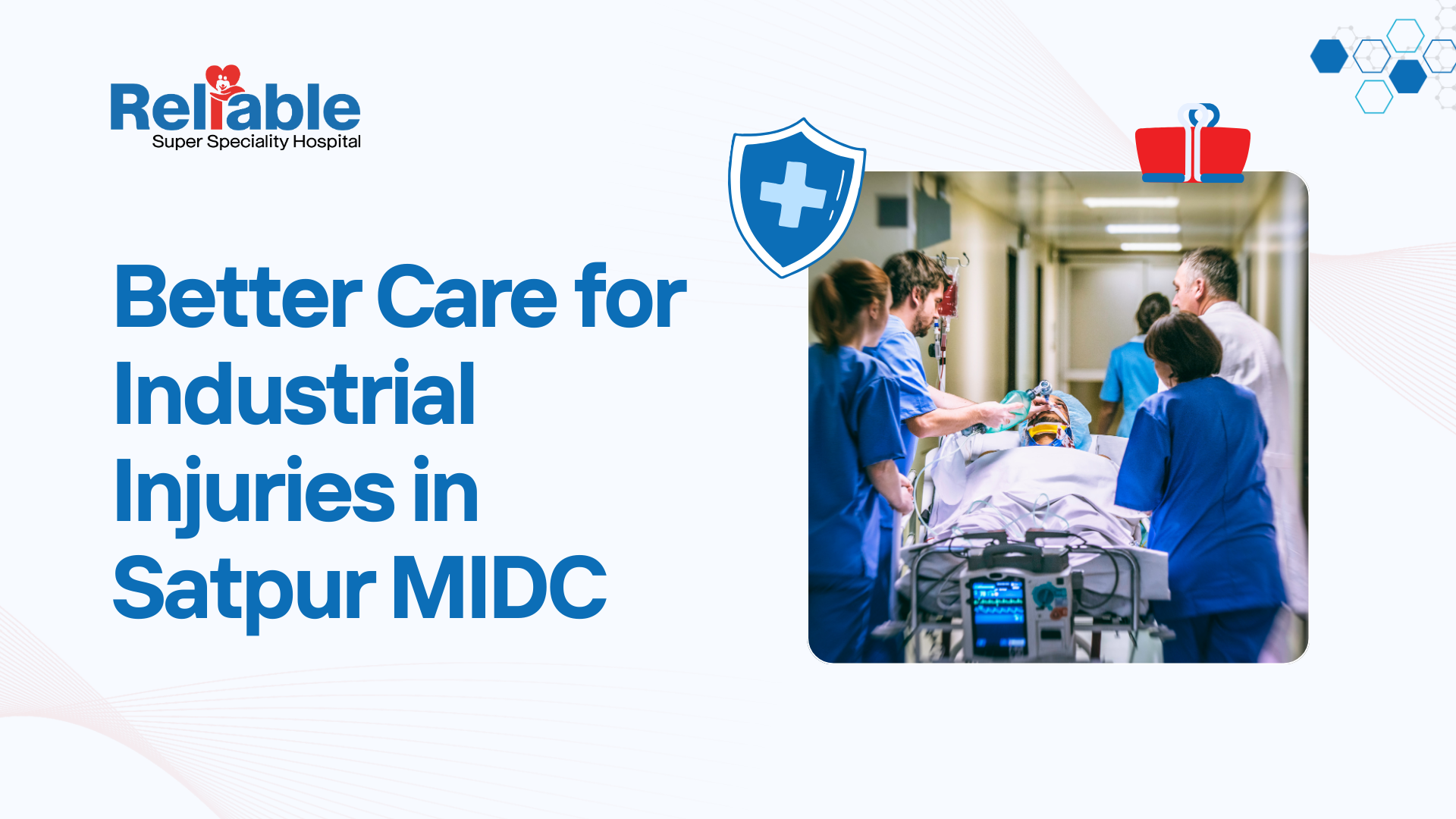
Better Care for Industrial Injuries in Satpur MIDC
Satpur MIDC is one of Nashik’s most
active industrial zones. With factories running multiple shifts, heavy
machinery in constant use, and large vehicle movement, the risk of workplace
injuries is higher than in most residential areas. When an industrial injury
occurs, the type of hospital a patient reaches can directly affect recovery,
complications, and long-term health.
Many people assume that any nearby medical facility is enough after a workplace
accident. In reality, industrial injuries often require more than basic
treatment. This is where the role of a hospital for industrial injuries in
Satpur becomes critical.
Understanding the Nature of Industrial Injuries
Industrial injuries
are rarely simple. Even when they appear minor at first, internal damage or
complications can develop later. Common workplace injuries in Satpur
MIDC
include:
- Crush injuries involving machinery
- Deep
cuts or lacerations
- Fractures
from falls or heavy objects
- Electrical
injuries
- Head
and spinal trauma
- Burns
and chemical exposure
These injuries often affect multiple
body systems at once. Treating them safely requires coordinated care, accurate
diagnosis, and continuous monitoring.
Why First Aid Alone Is Often Not Enough
On-site first aid or
nearby clinics play an important role in early response. However, they are
usually limited to stabilizing the patient. Industrial injuries frequently
need:
- Detailed imaging such as X-rays or CT scans
- Surgical
intervention
- ICU
monitoring
- Specialist
consultations
Delays in shifting patients to a
capable hospital can increase pain, complications, and recovery time. This is
why early transfer to a superspeciality setup is strongly advised after serious
workplace accidents.
What Superspeciality Care Adds in Industrial Injury Cases
A superspeciality
hospital is designed to manage complex cases under one roof. For industrial
injuries, this approach offers several advantages.
Multispecialist Evaluation
Industrial injuries
may involve bones, nerves, internal organs, or the brain. Superspeciality hospitals
allow different specialists to evaluate the patient together, ensuring nothing
is missed.
Advanced Diagnostics Without Delay
Quick access to
imaging and laboratory services helps doctors understand the full extent of the
injury early. This leads to more accurate treatment decisions.
Surgical Readiness
Some injuries require
immediate surgery to prevent permanent damage. Hospitals with prepared
operation theatres and surgical teams reduce waiting time during critical
moments.
ICU and Critical Care Support
Severe injuries may
need close monitoring after treatment or surgery. ICU availability ensures
patient safety during the most vulnerable phase of recovery.
Why Location Matters in Satpur MIDC Emergencies
Satpur MIDC
experiences high traffic during shift changes and working hours. Long travel
times during emergencies can worsen injuries. Choosing a hospital for
industrial injuries in Satpur that is nearby and prepared reduces delays caused
by:
- Traffic congestion
- Multiple
referrals
- Transfers
between facilities
Quick access to comprehensive care
improves outcomes and reduces stress for both patients and employers.
The Role of Employers and Families
Industries in Satpur
increasingly recognize the importance of emergency planning. Having a clear
understanding of where to take injured workers saves valuable time during
accidents. Families also benefit from knowing which hospitals are equipped to
handle serious injuries without delays.
Proactive planning helps ensure that
injured workers receive appropriate care from the start, rather than being
shifted between facilities.
Recovery and Return to Work
Industrial injuries
do not end with emergency treatment. Proper recovery planning is essential for
safe return to daily activities and work. Superspeciality hospitals support
recovery through:
- Post-surgical care
- Pain
management
- Follow-up
consultations
- Rehabilitation
planning when required
This continuity of care reduces the
risk of long-term disability and repeat injuries.
Making the Right Choice During Industrial Emergencies
Not every injury
looks severe at first glance. However, workplace accidents can have hidden
complications. Choosing a hospital equipped for industrial injury care ensures
that patients receive timely evaluation, treatment, and monitoring.
For those working in or around Satpur
MIDC, awareness about emergency-ready hospitals is a practical step toward
safety and better outcomes.
For workers and families in Satpur MIDC, access to structured emergency care,
advanced diagnostics, and surgical readiness plays a major role in recovery
after workplace accidents. Hospitals such as Reliable Superspeciality Hospital,
Nashik, focus on coordinated treatment systems that support patients from
industrial areas with timely and dependable care when it matters most.
FAQs
Why are industrial injuries different
from regular injuries?
Industrial injuries
often involve heavy machinery, heights, or electrical exposure, making them
more complex and risky than everyday injuries.
Is a clinic enough after a workplace accident?
Clinics can provide
first aid, but serious industrial injuries usually require advanced
diagnostics, surgery, or ICU care available at superspeciality hospitals.
What types of industrial injuries need
hospital admission?
Fractures, head
injuries, deep cuts, crush injuries, burns, and electrical injuries often need
admission and specialist care.
Why is early treatment important after
workplace accidents?
Early diagnosis and
treatment reduce complications, speed up recovery, and lower the risk of permanent
damage.
Do hospitals near Satpur MIDC handle industrial emergencies regularly?
Hospitals located
near industrial zones are generally more experienced in managing workplace
injuries due to higher case exposure