
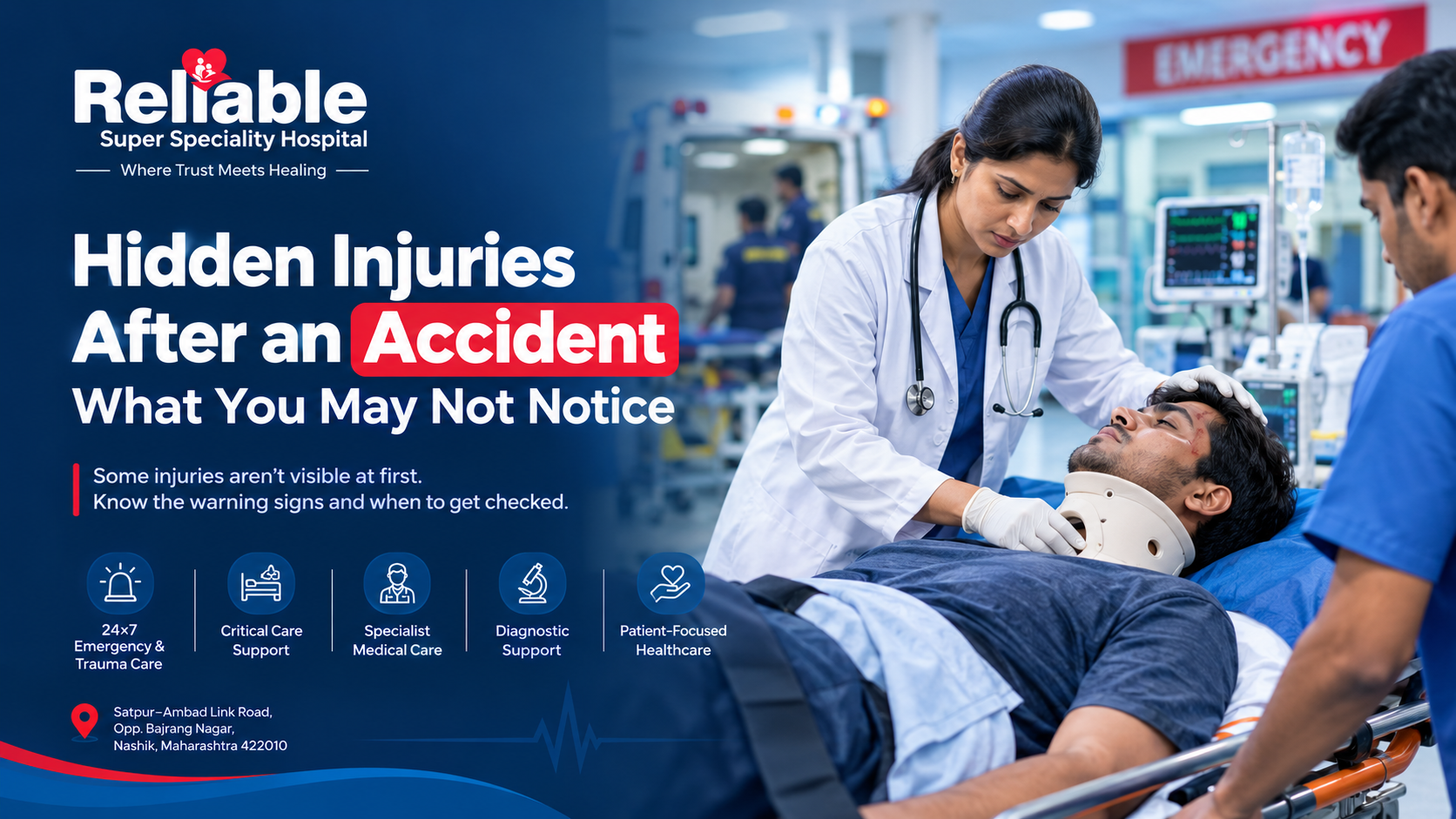
Hidden Injuries After a Road Accident: What You May Not Notice
A road accident can leave behind obvious injuries such as cuts, bruises, swelling or fractures. But some injuries may not be visible immediately. A person may feel relatively normal after an accident and still have an injury that needs medical attention.
Hidden injuries after an accident can include head injuries, internal bleeding, chest or abdominal injuries, spinal injuries, whiplash and soft-tissue injuries. Some symptoms may appear immediately, while others can develop or become more noticeable over the following hours or days.
This is why new, persistent or worsening symptoms after a road accident should not be ignored.
What Injuries Can Be Hidden After an Accident?
Some injuries may not have obvious external signs. Depending on the type and force of the accident, hidden injuries can include:
- Head injuries and concussion
- Internal bleeding
- Chest injuries
- Abdominal injuries
- Neck and spinal injuries
- Whiplash
- Soft-tissue injuries
- Some fractures or other musculoskeletal injuries
The absence of visible bleeding or a major wound does not necessarily mean that there is no significant injury.
Why May an Injury Not Be Noticeable Immediately?
Immediately after an accident, a person may be frightened, stressed or focused on what has happened. This can make it difficult to notice or accurately judge pain and other symptoms.
Some injuries also develop symptoms gradually. For example, symptoms following a concussion may appear later, and neck pain and stiffness from whiplash may take several hours to become noticeable.
Therefore, feeling fine immediately after an accident does not always rule out an injury.
Head Injuries After a Road Accident
A sudden impact can affect the head and brain even when there is no obvious external wound.
Possible symptoms after a head injury include:
- Headache
- Dizziness
- Nausea
- Vomiting
- Difficulty concentrating
- Memory problems
- Unusual tiredness
- Balance problems
- Confusion
- Changes in vision
Some concussion symptoms may develop hours or days after the injury.
When Is a Head Injury an Emergency?
Seek urgent medical attention if a person develops:
- Loss of consciousness
- Repeated vomiting
- A worsening or severe headache
- Increasing confusion
- Difficulty staying awake or waking up
- Seizures
- Weakness or numbness
- Difficulty speaking or walking
- Significant changes in behaviour
These symptoms can indicate a more serious brain injury and require prompt medical assessment.
Internal Injuries After an Accident
Internal injuries can sometimes occur without visible bleeding.
Depending on the type of trauma, internal bleeding or injury to organs may occur in the chest, abdomen or pelvis.
Possible warning signs include:
- Increasing abdominal pain
- Abdominal swelling
- Chest pain
- Dizziness or light-headedness
- Weakness
- Shortness of breath
- Pale or clammy skin
- Rapid heartbeat
- Confusion or reduced alertness
Internal bleeding can become serious quickly. If these symptoms occur after an accident, urgent medical assessment is important.
Chest Injuries After a Road Accident
A collision can cause injuries to the ribs, lungs or other structures within the chest.
Chest injuries may cause:
- Chest pain
- Pain while breathing
- Difficulty breathing
- Tenderness around the chest
- Increasing discomfort after the accident
Severe chest pain or difficulty breathing should be treated as an emergency.
Abdominal Injuries After an Accident
The abdomen contains several important organs and blood vessels. Trauma to the abdomen can sometimes cause internal injury without a large external wound.
Watch for:
- Abdominal pain
- Increasing abdominal tenderness
- Abdominal swelling
- Persistent nausea or vomiting
- Dizziness or weakness
- Blood in the urine
- Increasing discomfort after the accident
These symptoms should be medically evaluated, particularly if they are worsening.
Whiplash and Neck Injuries
Whiplash can occur when the head and neck move suddenly backward and forward during a collision.
Common whiplash symptoms include:
- Neck pain
- Neck stiffness
- Headache
- Shoulder pain
- Upper back pain
- Reduced neck movement
- Muscle tenderness or spasms
Whiplash symptoms may not appear immediately and can become noticeable several hours after the accident.
However, severe neck pain, numbness, tingling, weakness or difficulty walking requires prompt medical assessment because these symptoms can indicate a more significant injury.
Spinal Injuries After a Road Accident
A significant collision can injure the spine or the nerves associated with it.
Possible warning signs include:
- Severe neck or back pain
- Numbness or tingling
- Weakness in the arms or legs
- Difficulty walking
- Poor coordination
- Loss of sensation
- Changes in bladder or bowel control
If a serious spinal injury is suspected, unnecessary movement should be avoided until appropriate medical assistance is available.
Soft-Tissue Injuries May Also Appear Later
Not every accident injury involves a fracture.
Sudden impact can strain muscles, ligaments and other soft tissues. Pain, stiffness and swelling may become more noticeable after the immediate stress of the accident has settled.
Examples include:
- Muscle strains
- Ligament injuries
- Soft-tissue swelling
- Neck and shoulder stiffness
- Back muscle injuries
Persistent or worsening pain should not automatically be assumed to be a minor injury.
What Delayed Symptoms Should You Watch For?
After returning home from an accident, pay attention to any new or worsening symptoms.
Important symptoms may include:
- Headache
- Dizziness
- Nausea
- Vomiting
- Confusion
- Unusual sleepiness
- Difficulty concentrating
- Neck pain
- Back pain
- Abdominal pain
- Chest pain
- Breathing difficulty
- Weakness
- Numbness or tingling
- Difficulty walking
Delayed pain does not automatically mean that a serious injury has occurred. However, worsening or unusual symptoms should be evaluated by a healthcare professional.
When Should You Seek Emergency Medical Care?
Some symptoms after an accident require immediate medical attention.
Seek emergency care if there is:
- Severe or worsening pain
- Difficulty breathing
- Severe chest pain
- Heavy or uncontrolled bleeding
- Loss of consciousness
- Repeated vomiting after a head injury
- Seizures
- Increasing confusion
- Difficulty waking or staying awake
- Weakness or numbness
- Difficulty speaking or walking
- Severe abdominal pain or swelling
- Suspected serious neck or spinal injury
Do not wait for symptoms to become severe when there are signs of a potentially serious injury.
What Happens During a Medical Evaluation After an Accident?
A doctor or emergency healthcare team will first assess the person's overall condition and the circumstances of the accident.
The evaluation may include:
1. Understanding How the Accident Happened
The direction and force of impact, type of vehicle accident and affected body areas can help the medical team identify possible injuries.
2. Checking Vital Signs
Blood pressure, pulse, breathing and other vital signs may be assessed to understand the person's immediate condition.
3. Physical Examination
The healthcare team may assess pain, movement, neurological function and other signs related to possible injuries.
4. Diagnostic Tests When Required
Depending on the symptoms and clinical findings, the doctor may recommend tests such as X-rays, ultrasound or CT/MRI imaging.
Not every patient requires every test. The appropriate investigation depends on the individual's condition and clinical assessment.
Does Every Accident Injury Require Surgery?
No.
An accident injury does not automatically mean that surgery is required.
Treatment depends on the type and severity of the injury. Some injuries may be managed with observation, medication, immobilization, rehabilitation or other non-surgical treatment. More serious injuries may require a procedure or surgery.
The treatment decision should be made after proper medical evaluation.
What Should Family Members Watch For?
Sometimes the injured person may not recognize that their condition is changing. Family members should therefore watch for unusual changes after an accident.
Pay attention to:
- Increasing sleepiness
- Confusion
- Behaviour changes
- Worsening headache
- Repeated vomiting
- Increasing pain
- New weakness or numbness
- Difficulty walking
- Breathing difficulty
- Fainting
- Reduced alertness
If the person's condition is getting worse, seek medical attention promptly.
Why Is Timely Evaluation Important?
The purpose of medical evaluation after an accident is not to assume that every injury is serious. It is to identify injuries that may require treatment, monitoring or further investigation.
Some injuries are obvious, while others may have subtle or delayed symptoms.
A person can have no major external wound and still require medical assessment. At the same time, some post-accident pain may be related to a less serious soft-tissue injury.
The important point is that visible appearance alone cannot determine the severity of an accident injury.
Accident & Trauma Care at Reliable Super Speciality Hospital
Reliable Super Speciality Hospital is a 50-bedded multi & super speciality hospital in Satpur–Ambad, Nashik, providing 24×7 Emergency & Trauma Care.
After an accident, patients may require rapid assessment, stabilization, diagnostic evaluation and appropriate specialist support depending on their condition.
Reliable provides hospital-based emergency care with access to relevant diagnostic, critical care and orthopedic and trauma support.
For patients and families in Satpur, Ambad, Satpur MIDC, Ambad MIDC and surrounding Nashik areas, timely medical evaluation can be important when symptoms appear after a road accident.
Final Takeaway
Not all accident injuries are visible immediately.
Head injuries, internal injuries, chest and abdominal injuries, spinal injuries, whiplash and soft-tissue injuries may sometimes have delayed or subtle symptoms.
If you develop new or worsening symptoms after a road accident, do not ignore them. Medical evaluation can help determine whether further assessment or treatment is needed.
If there are serious symptoms such as loss of consciousness, difficulty breathing, severe bleeding, repeated vomiting, confusion, weakness, numbness or severe pain, seek emergency medical care without delay.
When in doubt after a significant accident, getting medically evaluated is safer than assuming that there is no injury.