
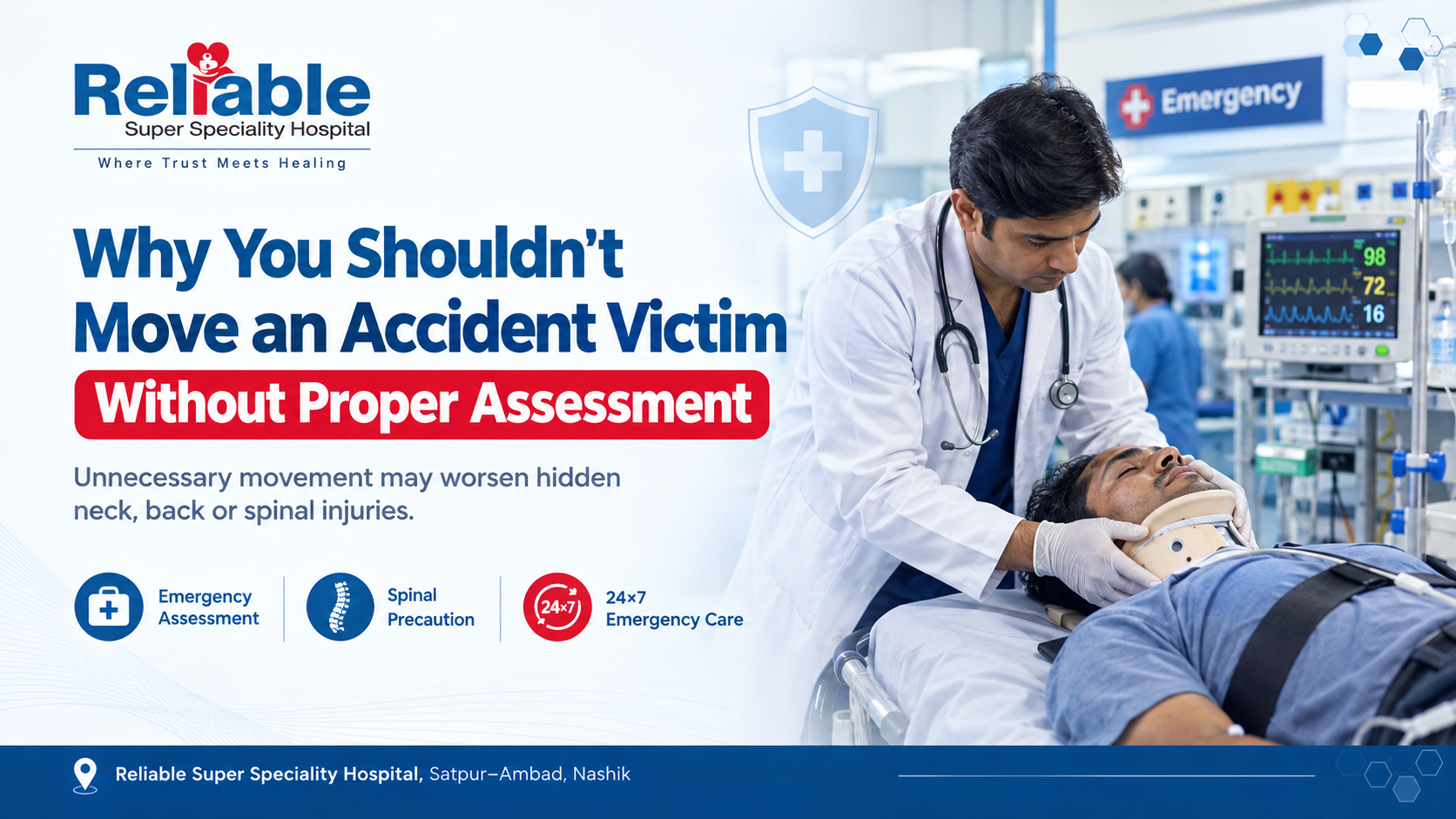
Why You Shouldn't Move an Accident Victim Without Proper Assessment
A road accident can be frightening and confusing. When someone is injured, the natural reaction may be to quickly lift them, pull them away from the vehicle or help them sit or stand.
However, moving an accident victim without first assessing the situation can sometimes make an injury worse.
A person involved in an accident may have an injury to the neck, back or spine that is not immediately obvious. Moving them unnecessarily could increase the risk of further injury. Unless there is an immediate danger, it is generally safer to keep the person still, call for emergency medical assistance and wait for trained responders.
For serious trauma, emergency assessment should not be delayed. Emergency content should prioritize immediate medical attention rather than encouraging someone to wait for online advice. Pasted markdown
Should You Move an Accident Victim?
Usually, no. Do not move an accident victim unless there is an immediate danger at the scene or movement is necessary to provide essential life-saving care.
For example, if the person is lying in a safe location and is breathing, avoid unnecessarily lifting, sitting, standing or walking them.
Instead:
- Check whether the accident scene is safe.
- Call for emergency medical assistance.
- Keep the injured person as still and calm as possible.
- Avoid unnecessary movement of the head, neck and back.
- Follow instructions given by emergency responders.
- Monitor the person's condition until professional help arrives.
The goal of accident victim first aid is not to diagnose the injury. It is to protect the person from further harm and arrange appropriate medical assessment.
Why Can Moving an Accident Victim Be Risky?
Some injuries are obvious, such as severe bleeding, an open wound or an abnormal-looking limb.
Other injuries may not be immediately visible.
After a road accident, a person may have a suspected:
- Neck injury
- Back injury
- Spinal injury
- Head injury
- Internal injury
- Fracture
- Soft-tissue injury
A person may also appear alert and able to speak while still having a significant injury.
This is why accident victim handling should be cautious. The absence of obvious symptoms does not necessarily mean that there is no serious injury.
Medical assessment is needed to determine the extent of the injury.
When Should You Avoid Moving an Accident Victim?
Avoid unnecessary movement when:
- The person is lying in a safe location.
- There is no immediate threat from traffic, fire or another hazard.
- A neck, back or spinal injury is possible.
- The person has significant pain in the neck or back.
- The person has weakness, numbness or difficulty moving a limb.
- The person is confused after the accident.
- There has been a significant impact to the head.
- The person is unconscious but breathing.
- There is a possibility of a serious fracture.
In these situations, keep the person as still as reasonably possible and wait for trained medical assistance.
When Might Moving an Accident Victim Be Necessary?
There are situations where leaving the person where they are could be more dangerous.
For example, the accident scene may involve:
- Fire or smoke
- Risk of explosion
- Moving traffic
- Collapsing structures
- Electrical hazards
- Another immediate threat to life
In such circumstances, getting the person away from immediate danger may become necessary.
However, movement should be limited to what is necessary for safety. Avoid unnecessary lifting, twisting or bending, particularly when a spinal injury is suspected.
If emergency services are available, follow the instructions provided by the dispatcher or trained responders.
What Should You Do First After a Road Accident?
1. Make Sure the Scene Is Safe
Do not rush into traffic or another hazardous area and become an additional casualty.
Look for immediate dangers before approaching the injured person.
2. Call for Emergency Medical Assistance
Serious injuries require professional assessment.
Contact emergency medical services as soon as possible and provide clear information about the location and condition of the injured person.
3. Avoid Unnecessary Movement
If the person is in a safe position, encourage them to remain still.
Do not ask them to walk around to "check" whether they are injured.
4. Reassure the Person
An accident victim may be frightened, confused or distressed.
Speak calmly and reassure them that help is being arranged.
5. Follow Emergency Instructions
If a dispatcher or trained medical professional gives first-aid instructions, follow them carefully.
Do not attempt procedures beyond your training.
What If the Accident Victim Has a Possible Spinal Injury?
A suspected spinal injury deserves particular caution.
The spine contains the spinal cord and important nerves. Trauma involving the head, neck or back can potentially cause serious neurological injury.
Possible warning signs may include:
- Neck or back pain
- Numbness or tingling
- Weakness
- Difficulty moving the arms or legs
- Loss of sensation
- Unusual positioning of the neck or back
- Loss of consciousness
- Confusion following significant trauma
These symptoms do not establish a diagnosis, but they are reasons for urgent medical assessment.
If a spinal injury is suspected, do not unnecessarily move or reposition the person unless there is an immediate danger or movement is required for essential life-saving care.
What About a Head Injury After an Accident?
Head injuries can range from minor injuries to serious trauma.
A person should receive urgent medical assessment after significant trauma, particularly if there is:
- Loss of consciousness
- Increasing confusion
- Severe or worsening headache
- Repeated vomiting
- Seizure
- Unusual drowsiness or difficulty staying awake
- Weakness or difficulty speaking
- Significant bleeding
- Serious impact to the head
A person who appears fine immediately after an accident may still require medical evaluation depending on the circumstances.
Do not rely only on how the person feels immediately after the accident.
What If the Person Is Bleeding?
Severe bleeding is an emergency.
If it is safe to approach the person and you can do so without unnecessarily moving them, appropriate first aid may include applying firm direct pressure to an external bleeding wound using available clean material.
For life-threatening bleeding, follow emergency-service instructions while waiting for professional help.
The priority is to control the immediate threat while avoiding unnecessary movement of the injured person.
Should You Remove an Accident Victim's Helmet?
If an accident victim is wearing a helmet, do not remove it unnecessarily.
Helmet removal can involve movement of the head and neck. If the person is conscious and breathing normally, it is generally safer to leave the helmet in place until trained responders assess the situation.
If there is an immediate life-threatening problem requiring intervention, trained rescuers should manage the situation according to emergency protocols.
Why Is Professional Trauma Assessment Important?
Accident injuries cannot always be understood from visible symptoms alone.
A healthcare team may assess:
- Level of consciousness
- Breathing and circulation
- Neurological function
- Head and neck condition
- Spine and back
- Limbs and possible fractures
- Visible and suspected internal injuries
- Other effects of the accident
Depending on the patient's condition, doctors may determine whether imaging, observation, specialist assessment or other treatment is required.
Trauma assessment is different from simply checking whether someone can stand or walk.
When Should You Seek Emergency Care After an Accident?
Emergency medical attention is particularly important when an accident victim has:
- Loss of consciousness
- Severe bleeding
- Difficulty breathing
- Severe chest pain
- Sudden weakness or paralysis
- Serious head injury
- Severe trauma
- Major fracture or visible deformity
- Confusion after injury
- Severe burns
- Significant industrial or workplace injury
These are examples of potentially serious warning signs identified in the hospital's emergency-content guidance. Pasted markdown
If a serious injury is suspected, do not wait for symptoms to become worse before seeking medical attention.
What Should Bystanders Avoid Doing?
During accident emergency response, bystanders should avoid:
- Pulling the person unnecessarily
- Making the person stand or walk
- Twisting the neck or back
- Trying to straighten an obviously deformed limb
- Giving food or drink to a seriously injured person
- Moving the person simply because they appear uncomfortable
- Attempting unfamiliar medical procedures
- Assuming the person is fine because they are conscious
Instead, focus on scene safety, emergency assistance, reassurance and preventing unnecessary movement.
Accident First Aid in Nashik: When Should You Seek Hospital Care?
For people in Nashik, including the Satpur–Ambad area and nearby communities, serious road accidents or workplace injuries should be treated as situations requiring prompt medical assessment.
Reliable Super Speciality Hospital in Satpur–Ambad, Nashik is a 50-bedded multi & super speciality hospital with 24×7 emergency and trauma care, ICU care, modern diagnostics and orthopedic and trauma support. These capabilities are relevant to patients who require assessment and coordinated emergency care after significant injuries. Pasted markdown
The hospital's location also makes it relevant to patients from areas around Satpur, Ambad, Satpur MIDC and Ambad MIDC, particularly where workplace or industrial injuries may occur.
The Most Important Rule: Don't Make the Injury Worse
When an accident happens, people often feel they need to act immediately.
But good first aid is not about doing as much as possible.
Sometimes the safest action is to:
Keep the person still → Call for emergency help → Monitor them → Follow professional instructions.
If there is an immediate danger, move the person only as much as necessary to reach safety.
Remember that symptoms do not always reveal the full extent of an injury. A person who appears conscious and relatively comfortable may still need medical assessment after significant trauma.
Final Takeaway
Should you move an accident victim? Usually, no—not unless there is an immediate danger or movement is necessary for essential life-saving care.
Unnecessary movement after a road accident may potentially worsen an undiagnosed neck, back or spinal injury. The safest approach is to assess the scene, call for emergency medical assistance, keep the injured person as still as possible and follow instructions from trained responders.
If serious warning signs such as loss of consciousness, severe bleeding, breathing difficulty, confusion, major fractures or serious head trauma are present, seek emergency medical attention without delay.
FAQ SECTION
1. Should you move an accident victim?
Usually, you should not move an accident victim unless there is an immediate danger at the scene or movement is necessary to provide essential life-saving care. If the person is in a safe location, keep them as still as possible and wait for trained medical assistance.
2. Why should you not move an accident victim?
An accident victim may have an undiagnosed neck, back or spinal injury. Unnecessary lifting, twisting or repositioning could potentially worsen the injury.
3. What should you do first after a road accident?
First make sure the scene is safe, then call for emergency medical assistance. Keep the injured person as still and calm as possible and follow instructions from emergency responders.
4. What are signs of a possible spinal injury after an accident?
Possible warning signs include neck or back pain, numbness, tingling, weakness, difficulty moving the limbs, loss of sensation or neurological changes. These symptoms require prompt medical assessment.
5. When should an accident victim be taken to the hospital?
Emergency medical assessment is important when there is loss of consciousness, severe bleeding, difficulty breathing, serious head injury, confusion, major fracture, severe trauma or other potentially life-threatening symptoms.
6. Should you remove a helmet from an accident victim?
Do not remove a helmet unnecessarily because doing so can involve movement of the head and neck. If there is an immediate life-threatening problem, trained responders should manage the situation according to emergency protocols.
7. Can an accident victim have a serious injury without obvious symptoms?
Yes. Some injuries may not be immediately obvious after an accident. A person may appear alert while still having an injury requiring medical assessment.
8. When should you call emergency medical assistance after an accident?
Call for emergency medical assistance when an injury appears serious, the person has concerning symptoms, or there is any doubt about their condition after significant trauma. In a life-threatening situation, emergency care should not be delayed.
PRIMARY CTA
Get Medical Help
If you or someone around you has been involved in a serious accident, do not unnecessarily move the injured person. Make the scene safe, seek emergency medical assistance and follow professional instructions.
For serious injuries or concerning symptoms, reach the nearest emergency department without delay.
Reliable Super Speciality Hospital
Satpur–Ambad Link Road, Opp. Bajrang Nagar, Nashik, Maharashtra 422010
CTA Button: Get Medical Help