
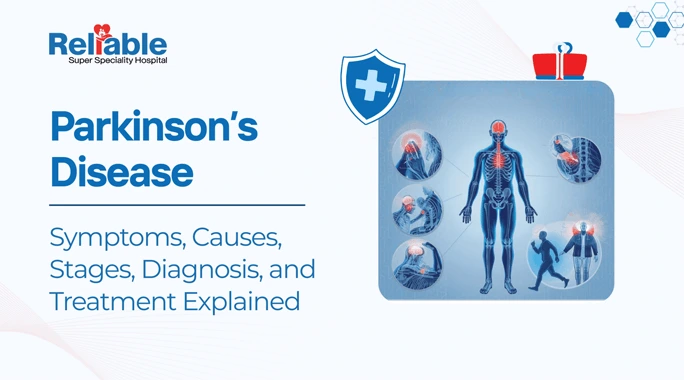
Parkinson’s Disease: Symptoms, Causes, Stages, Diagnosis, and Treatment Explained
- Admin
- general
- 19 Jun, 2026
Parkinson’s disease is a progressive neurological disorder that affects movement, coordination, and balance. It develops gradually and often begins with subtle symptoms such as tremors or stiffness that worsen over time.
Many people search for answers like:
- What is Parkinson’s disease?
- What causes Parkinson’s?
- What are the early signs of Parkinson’s disease?
- Is Parkinson’s curable?
- What is the life expectancy with Parkinson’s disease?
Understanding Parkinson’s disease clearly helps patients and families plan treatment, lifestyle adjustments, and long-term care with confidence.
What Is Parkinson’s Disease?
Parkinson’s disease is a chronic and progressive brain disorder that affects the nervous system. It occurs when nerve cells in a part of the brain called the substantia nigra gradually break down and stop producing enough dopamine.
Dopamine is a chemical messenger that controls smooth and coordinated muscle movement. When dopamine levels drop, movement becomes slow, stiff, and less controlled.
Parkinson’s mainly affects people over the age of 60, but early-onset Parkinson’s disease can occur before age 50.
What Causes Parkinson’s Disease?
The exact cause of Parkinson’s disease is not fully known. However, researchers believe it results from a combination of genetic and environmental factors.
Common Causes and Risk Factors:
- Loss of dopamine-producing brain cells
- Genetic mutations (in some cases)
- Exposure to toxins or pesticides
- Advancing age
- Family history of Parkinson’s disease
In most cases, Parkinson’s develops without a clear single cause.
Early Symptoms of Parkinson’s Disease
One of the most searched questions is: “What are the early signs of Parkinson’s?”
Early symptoms may be mild and easily overlooked.
Common Early Signs:
- Slight tremor in one hand or finger
- Slowness of movement (bradykinesia)
- Muscle stiffness
- Reduced facial expression
- Softer or low voice
- Small handwriting (micrographia)
- Reduced arm swing while walking
Early diagnosis allows earlier symptom control and better quality of life.
Main Symptoms of Parkinson’s Disease
Parkinson’s symptoms are generally divided into motor and non-motor symptoms.
Motor Symptoms:
- Resting tremor
- Muscle rigidity
- Slowed movements
- Balance problems
- Postural instability
Non-Motor Symptoms:
- Depression and anxiety
- Sleep disturbances
- Constipation
- Loss of smell
- Memory issues
- Fatigue
Non-motor symptoms may appear years before movement symptoms.
Stages of Parkinson’s Disease
Doctors often classify Parkinson’s into five stages using the Hoehn and Yahr scale.
-
Stage 1
Mild symptoms on one side of the body. -
Stage 2
Symptoms affect both sides but balance remains intact. -
Stage 3
Balance problems begin. Daily activities become slower. -
Stage 4
Severe symptoms. Independent living becomes difficult. -
Stage 5
Advanced stage. Full-time assistance may be required.Progression varies from person to person.
How Is Parkinson’s Disease Diagnosed?
There is no single blood test for Parkinson’s disease.
Diagnosis is based on:
- Detailed medical history
- Neurological examination
- Movement assessment
- Brain imaging (in some cases to rule out other conditions)
Early consultation with a neurologist improves diagnostic accuracy.
Is Parkinson’s Disease Curable?
Parkinson’s disease does not currently have a cure. However, it is treatable.
With proper medication, physiotherapy, and lifestyle management, many patients live productive and meaningful lives for years after diagnosis.
Treatment for Parkinson’s Disease
Treatment focuses on managing symptoms and improving quality of life.
Medications
- Levodopa (most effective treatment)
- Dopamine agonists
- MAO-B inhibitors
- COMT inhibitors
These medicines help restore or mimic dopamine activity.
Surgical Treatment
In selected cases, Deep Brain Stimulation (DBS) may be recommended when medications become less effective.
Lifestyle and Supportive Therapy
- Regular exercise
- Physiotherapy
- Speech therapy
- Occupational therapy
- Balanced diet
Exercise plays a major role in slowing functional decline.
Life Expectancy With Parkinson’s Disease
Another common query is: “How long can someone live with Parkinson’s disease?”
Parkinson’s itself is not directly fatal. With modern treatment, many people live close to normal life expectancy, especially when diagnosed early and managed properly.
Complications such as falls, infections, or swallowing difficulties can impact long-term outcomes.
Can Parkinson’s Disease Be Prevented?
There is no guaranteed way to prevent Parkinson’s disease. However, research suggests that:
- Regular physical activity
- Healthy diet
- Avoiding toxin exposure
- Managing chronic diseases
may support brain health.
Mental Health and Parkinson’s Disease
Depression, anxiety, and cognitive changes are common but often under-recognised aspects of Parkinson’s.
Early counselling, family support, and appropriate psychiatric care are important parts of comprehensive management.
Living With Parkinson’s Disease
A Parkinson’s diagnosis changes daily life, but it does not remove independence immediately. Many patients continue working, traveling, and enjoying family life with proper treatment and support.
Structured medical care, regular follow-ups, and rehabilitation planning make a significant difference in long-term outcomes.
FAQs About Parkinson’s Disease
What is the first symptom of Parkinson’s disease?
A mild tremor in one hand or finger is often the first noticeable sign, though some people first experience stiffness or slower movements.
What causes Parkinson’s disease?
Parkinson’s is caused by the gradual loss of dopamine-producing brain cells. The exact reason is unclear but may involve genetics and environmental triggers.
Is Parkinson’s disease hereditary?
Most cases are not directly inherited. However, certain genetic mutations may increase risk in some families.
At what age does Parkinson’s disease start?
It commonly begins after age 60, but early-onset Parkinson’s can occur before age 50.
Is Parkinson’s disease fatal?
Parkinson’s itself is not usually fatal. Many patients live long lives with proper treatment and medical support.
Can Parkinson’s disease be cured?
There is no cure yet, but medications and therapies effectively control symptoms.
What are the 5 stages of Parkinson’s disease?
The stages range from mild symptoms on one side of the body to advanced disease requiring full-time care.
What is the best treatment for Parkinson’s disease?
Levodopa remains the most effective medication, often combined with lifestyle therapy and physiotherapy.
Final Medical Insight
Parkinson’s disease is a progressive neurological condition that requires early recognition, structured treatment, and long-term follow-up. While it cannot be cured, timely medical intervention significantly improves mobility, independence, and overall quality of life.