
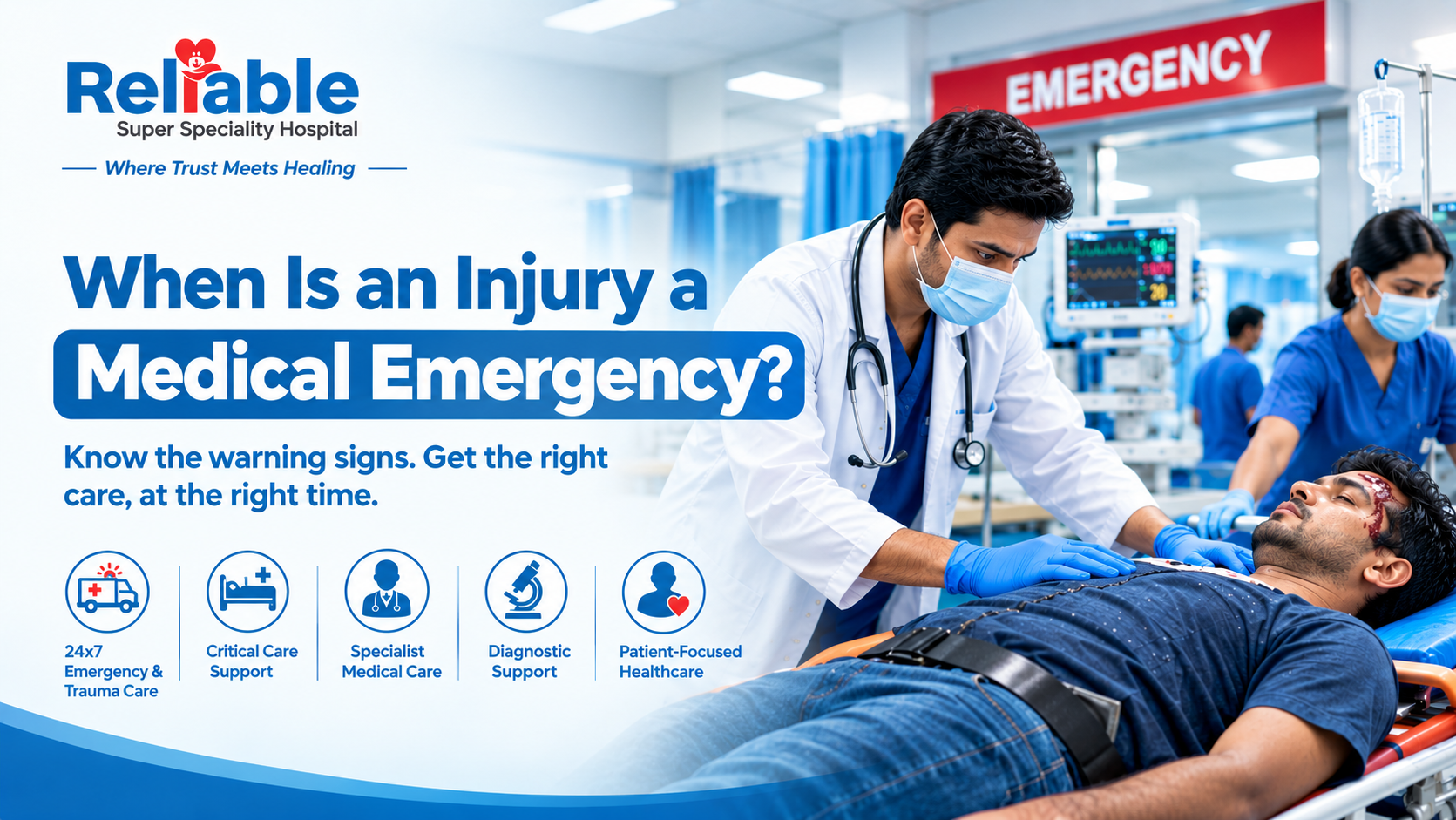
When Is an Injury a Medical Emergency?
When Is an Injury a Medical Emergency?
Injuries can range from minor cuts and bruises to serious conditions that require immediate medical attention. Knowing the difference can help patients and families respond quickly when every minute matters.
An injury may be a medical emergency when it causes severe bleeding, difficulty breathing, loss of consciousness, severe or worsening pain, signs of shock, a suspected spinal injury, or symptoms suggesting internal bleeding or serious damage to the head, chest, abdomen, or other vital areas.
If you are unsure about the severity of an injury, especially after a road accident, fall, workplace accident, or other significant trauma, seek prompt medical evaluation.
When Is an Injury a Medical Emergency?
An injury should be treated as a medical emergency when there are signs that the person's life, brain function, breathing, circulation, or major organs may be at risk.
Some important warning signs include:
Severe or uncontrolled bleeding
Loss of consciousness or difficulty waking up
Difficulty breathing
Severe chest pain after an injury
Severe abdominal pain or swelling
Confusion, unusual behavior, or significant drowsiness
Seizures after an injury
Sudden weakness, numbness, or difficulty moving a limb
Suspected spinal or neck injury
A visibly deformed or severely injured limb
Severe pain that is rapidly worsening
Pale, cold, clammy skin or other signs of shock
Blood coming from the mouth, nose, ears, or other unusual areas after significant trauma
These serious injury warning signs require immediate medical assessment.
Signs of a Serious Injury
Some serious injuries are not immediately obvious. A person may initially appear well but develop symptoms later.
After a significant accident or injury, watch for:
Increasing pain or swelling
Repeated vomiting
Persistent dizziness
Confusion or difficulty communicating
Increasing sleepiness
Difficulty walking or maintaining balance
New weakness or numbness
Breathing problems
Blood in vomit, urine, or stool
Increasing abdominal pain
Fainting or near-fainting
These can indicate complications that need urgent evaluation.
Head Injury Emergency Signs
Head injuries require particular attention because symptoms may develop or worsen over time.
Seek emergency medical care after a head injury if there is:
Loss of consciousness
Repeated vomiting
Increasing headache
Confusion or unusual behavior
Increasing drowsiness or difficulty waking
Seizures
Weakness or numbness
Difficulty speaking, walking, or seeing
Unequal pupils
Blood or clear fluid coming from the nose or ears after significant trauma
Children, older adults, and people taking medicines that affect blood clotting may require particularly careful assessment after a head injury.
Severe Bleeding After an Injury
Heavy bleeding is one of the clearest signs that an injury may require immediate medical attention.
If a wound is bleeding heavily:
Call for emergency medical help.
Apply firm, continuous pressure to the wound using clean cloth or gauze if available.
Keep the injured person as still and calm as possible.
Do not repeatedly remove the dressing to check the wound. If blood soaks through, place additional material over it and continue applying pressure.
If an object is embedded in the wound, do not attempt to remove it yourself.
Severe bleeding can become life-threatening quickly and should not be managed at home when bleeding cannot be controlled.
Difficulty Breathing or Chest Pain After an Injury
Difficulty breathing after an accident or injury can indicate a serious problem involving the chest, lungs, or other structures.
Emergency evaluation is important if the person develops:
Shortness of breath
Rapid or difficult breathing
Severe chest pain
Bluish lips or skin
Coughing blood
Increasing weakness or dizziness
Severe pain after a chest injury
Do not wait for symptoms to become severe before seeking emergency care.
Severe Abdominal Pain After an Injury
A blow to the abdomen can sometimes cause internal injury even when there is little or no visible external damage.
Severe abdominal pain after an injury should be assessed urgently, particularly when accompanied by:
Abdominal swelling or tenderness
Fainting or dizziness
Pale, cold, clammy skin
Weakness
Vomiting
Blood in vomit, urine, or stool
Increasing abdominal pain
These symptoms may require urgent evaluation for possible internal bleeding or organ injury.
Broken Bone Emergency Symptoms
Not every fracture requires an ambulance, but certain injuries need immediate medical assessment.
Emergency attention may be necessary when:
The bone is visible through the skin
The limb has an obvious deformity
There is severe swelling or pain
The injured limb becomes pale, blue, cold, or numb
There is significant bleeding
The person cannot move the affected limb
The injury involves the spine, neck, pelvis, or a major joint
The injury occurred during a high-impact accident
Avoid trying to straighten or reposition a visibly deformed limb yourself.
Spinal Injury Warning Signs
Spinal injuries can occur after road accidents, falls from height, sports injuries, or other high-impact trauma.
Possible warning signs include:
Severe neck or back pain
Numbness or tingling
Weakness in the arms or legs
Difficulty moving
Loss of bladder or bowel control
Loss of sensation
Difficulty maintaining balance
If a spinal injury is suspected, keep the person as still as possible and seek emergency medical assistance. Avoid unnecessary movement unless there is an immediate danger at the scene.
Loss of Consciousness After an Injury
Loss of consciousness after an injury should not be ignored, even if the person wakes up and appears to feel better.
It can occur with serious head injury and may require medical assessment. Emergency care is particularly important when loss of consciousness is followed by vomiting, confusion, worsening headache, seizures, weakness, or increasing drowsiness.
What Should You Do Immediately After a Serious Injury?
While waiting for professional medical help:
Move the person only when necessary for immediate safety.
Check whether the person is responsive and breathing normally.
Apply pressure to significant external bleeding.
Do not give food or drink to a seriously injured or unconscious person.
Avoid unnecessary movement if a neck or spinal injury is suspected.
Do not attempt to straighten severely deformed bones or joints.
Follow instructions from emergency medical professionals.
First aid can help stabilize a person, but it does not replace professional emergency evaluation.
When Should You Go to the Emergency Room for an Injury?
You should seek emergency medical care when an injury causes symptoms that could indicate serious or life-threatening damage.
This includes:
Severe or uncontrolled bleeding
Difficulty breathing
Loss of consciousness
Seizures
Severe head injury symptoms
Severe chest or abdominal pain
Signs of shock
Suspected spinal injury
Serious fractures or deformities
Sudden weakness, numbness, or loss of movement
Rapidly worsening symptoms after an accident
If you are uncertain whether an injury is serious, it is safer to seek professional medical advice rather than waiting for symptoms to worsen.
Why Prompt Emergency Treatment Matters
Some traumatic injuries can worsen rapidly or may not produce obvious symptoms immediately. Prompt assessment allows medical professionals to evaluate the injury, identify potentially serious complications, provide stabilization, and determine whether imaging, observation, surgery, or other treatment is required.
This is particularly important following road traffic accidents, falls, workplace injuries, sports injuries, and other high-impact trauma.
Emergency Trauma Care in Nashik
For patients and families looking for emergency trauma care in Nashik, timely access to medical evaluation is important after a serious accident or injury.
Reliable Super Speciality Hospital provides emergency medical care for patients requiring urgent assessment and treatment. The hospital offers 24×7 emergency services with access to multidisciplinary medical support for various emergency conditions and traumatic injuries.
If you or someone around you is experiencing medical emergency symptoms in Nashik, seek emergency medical care promptly rather than waiting for the symptoms to improve on their own.
Frequently Asked Questions
When is an injury considered a medical emergency?
An injury is considered a medical emergency when it causes symptoms such as severe bleeding, difficulty breathing, loss of consciousness, severe chest or abdominal pain, signs of shock, suspected spinal injury, seizures, or other symptoms suggesting potentially serious or life-threatening damage.
What are the signs of a serious injury?
Signs can include severe pain, uncontrolled bleeding, loss of consciousness, confusion, difficulty breathing, weakness or numbness, severe swelling, deformity, repeated vomiting, or worsening symptoms after an accident.
Should I go to the emergency room after an accident?
Seek emergency medical care if you have serious symptoms such as loss of consciousness, difficulty breathing, severe bleeding, chest or abdominal pain, suspected spinal injury, major fractures, seizures, or rapidly worsening symptoms.
Can internal bleeding happen without visible bleeding?
Yes. Internal bleeding may occur without an obvious external wound. Symptoms can include increasing abdominal pain or swelling, dizziness, weakness, fainting, pale or clammy skin, or other signs of shock. These symptoms require urgent medical assessment.
What should I do if I suspect a spinal injury?
Keep the injured person as still as possible and seek emergency medical assistance. Avoid unnecessary movement, especially of the neck or back, unless remaining in place presents an immediate danger.
When should a head injury be treated as an emergency?
Seek emergency care for symptoms such as loss of consciousness, repeated vomiting, seizures, worsening headache, confusion, increasing drowsiness, weakness or numbness, difficulty speaking or walking, or other significant neurological changes following a head injury.
Get Emergency Care
Serious injuries can become emergencies quickly. If you notice severe injury symptoms, difficulty breathing, uncontrolled bleeding, loss of consciousness, suspected spinal injury, or other serious warning signs, seek emergency medical attention without delay.
Reliable Super Speciality Hospital, Nashik is available to provide emergency medical care when urgent evaluation and treatment are needed.