



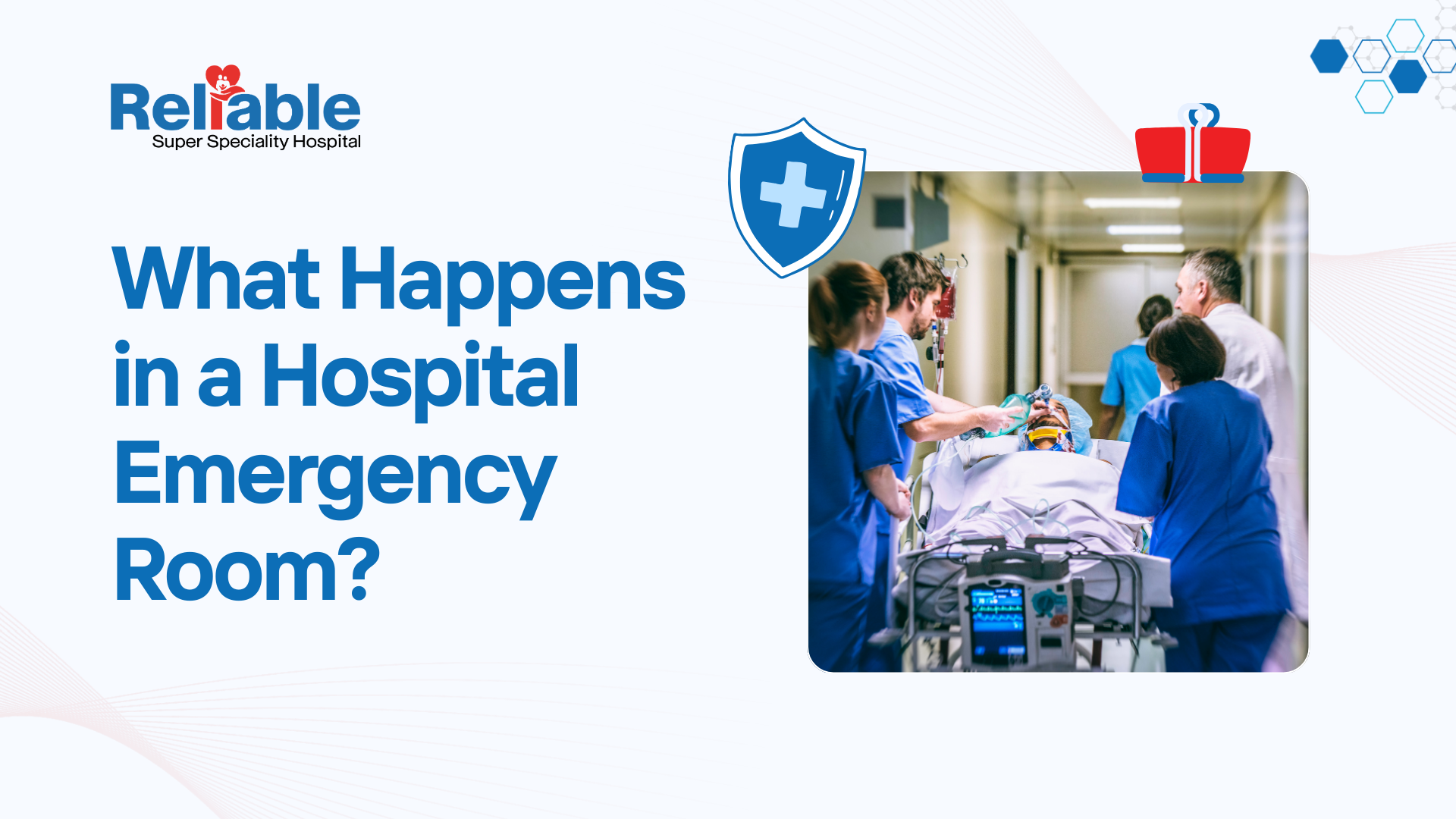
What Happens in a Hospital Emergency Room? A Complete Guide
When a medical emergency strikes, every second matters. Whether it’s a road accident, chest pain, industrial injury, or sudden breathing difficulty, knowing what happens inside a hospital emergency room can reduce panic and help families act quickly.
If you are searching for terms like “24 hour emergency hospital near me,” “emergency hospital in Satpur,” or “what happens in ER,” this guide explains the entire process step by step.
What Is a Hospital Emergency Room?
An emergency room (ER) is a specialized hospital department that provides 24×7 immediate medical care for serious and life-threatening conditions. Unlike regular OPD services, the ER is designed to handle:
Accidents and trauma
Heart attacks and strokes
Severe bleeding
Breathing difficulty
Sudden unconsciousness
Industrial injuries
High fever with complications
Emergency departments are equipped with trained doctors, trauma teams, critical care support, and advanced monitoring systems.
Step 1: Arrival at the Emergency Hospital
Patients may arrive by:
Ambulance
Private vehicle
Walk-in emergency
In trauma cases or industrial accidents, ambulance transport ensures safer and faster transfer with basic life support en route. Immediate attention is given even before formal registration in critical cases.
Step 2: Triage – Prioritizing Patients
One of the most important processes inside an emergency room is triage.Triage means assessing how serious a patient’s condition is and deciding treatment priority. Patients are not treated based on arrival time but based on medical urgency.
For example:
Cardiac arrest → Immediate attention
Severe bleeding → High priority
Mild fever → Lower priority
This system ensures life-threatening cases are treated without delay.
Step 3: Initial Medical Assessment
After triage, the emergency doctor performs a quick but focused evaluation. This includes:
Checking vital signs (pulse, blood pressure, oxygen levels)
Physical examination
Brief medical history
Identifying visible injuries
In trauma or accident cases, the team follows structured emergency protocols to stabilize the patient.
Step 4: Emergency Stabilization
Stabilization is the first goal in any emergency. This may involve:
Oxygen support
IV fluids
Bleeding control
Pain management
Cardiac monitoring
Emergency medications
For industrial trauma or accident injuries, fracture immobilization or wound management may be done immediately.
Step 5: Diagnostic Tests
Once the patient is stable, doctors may order tests such as:
Blood tests
ECG (for heart issues)
X-ray (for fractures)
CT scan (for head injury or internal bleeding)
Ultrasound
Emergency rooms are designed for rapid diagnosis so treatment decisions can be made quickly.
Step 6: Specialist Consultation
In serious cases, emergency doctors coordinate with specialists such as:
Orthopedic surgeons
General surgeons
Neurologists
Cardiologists
Critical care specialists
This multidisciplinary approach is crucial in trauma hospitals, especially for polytrauma or industrial accidents.
Step 7: Decision: Admission, Surgery, or Discharge
After evaluation and testing, doctors decide the next step:
Admission to ICU or ward
Emergency surgery
Observation
Safe discharge with medication
For severe trauma cases, surgery may be performed immediately in a fully equipped operation theatre. Emergency Room vs OPD: What’s the Difference?
Many people confuse ER with OPD. Emergency Room:
24×7 service
For life-threatening conditions
Immediate treatment
No prior appointment needed
OPD:
Scheduled consultation
Non-urgent issues
Regular follow-up visits
If symptoms are severe, sudden, or worsening, emergency care is the right choice.
Common Conditions Treated in Emergency Rooms
Emergency hospitals frequently handle:
Road traffic accidents
Industrial crush injuries
Burns
Head injuries
Stroke symptoms
Heart attack
Severe asthma attacks
Poisoning cases
High fever with seizures
In industrial areas like Ambad and Satpur MIDC, workplace injuries are among the most common emergency cases.
Why 24×7 Emergency Care Is Critical
Emergencies do not follow a schedule. Nighttime accidents, late-shift factory injuries, and sudden cardiac events require immediate hospital access. A 24 hour emergency hospital ensures:
Round-the-clock medical team availability
Immediate trauma response
Faster surgical decision-making
Reduced mortality risk
The “golden hour” concept in trauma medicine highlights how early treatment can save lives and prevent permanent damage.
What Makes a Good Emergency Hospital?
When choosing an emergency hospital, consider:
24×7 availability
Experienced emergency doctors
Trauma handling capability
Advanced ICU support
Infection-controlled operation theatres
Quick ambulance access
Strategic location for faster arrival
Infrastructure and trained personnel together determine patient outcomes.
Emergency & Trauma Care at Reliable Superspeciality Hospital
Reliable Superspeciality Hospital provides 24×7 emergency services for accidents, trauma, cardiac emergencies, and industrial injuries in the Ambad–Satpur region of Nashik. With trained emergency professionals, rapid triage systems, and advanced surgical infrastructure, the hospital focuses on stabilizing critical patients quickly and safely.
Its location on the Satpur–Ambad Link Road ensures faster accessibility for industrial workers and local residents during urgent situations.
Frequently Asked Questions (FAQs)
1. What happens first in an emergency room?
Triage assessment is performed to determine the urgency of your condition.
2. Do emergency rooms treat patients without registration?
In life-threatening cases, treatment begins immediately before paperwork.
3. How long does emergency treatment take?
It depends on the severity of the condition and required investigations.
4. Can I go to the emergency room at night?
Yes. A 24×7 emergency hospital operates round the clock.
5. What should I carry to an emergency hospital?
If possible, bring previous medical records, current medications, and ID proof. But in critical cases, immediate treatment comes first.
Final Thoughts
Understanding what happens in a hospital emergency room can help reduce fear during stressful moments. Emergency departments are structured systems designed to assess, stabilize, and treat critical conditions quickly.
If you or someone near you experiences sudden severe symptoms, do not delay. Immediate emergency care can make the difference between complication and recovery.